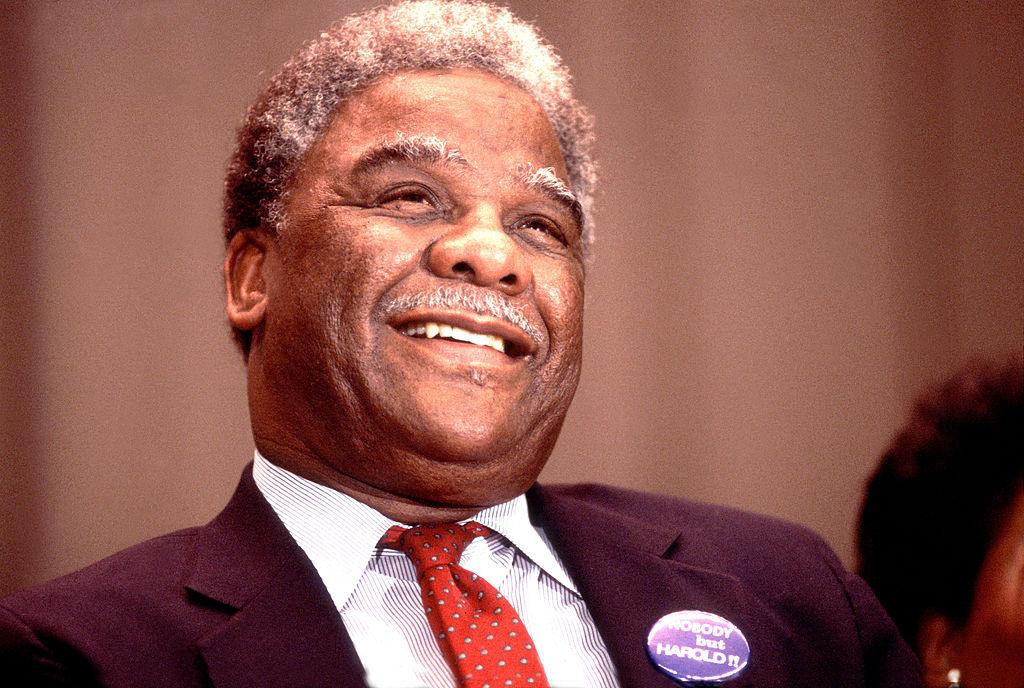
With another election just weeks away, Chicagoans can revisit one of the city’s most historic races this week: “Punch 9 for Harold Washington,” a documentary about the election of the city’s first Black mayor, is being screened Wednesday at Loyola University.
Journalist Laura Washington (no relation) covered his mayoral campaign in 1983 and was later a deputy press secretary in his administration. She shared the significance of his election.
This interview has been edited for length and clarity.
You wrote that in 1983, more than 77% of Chicago's eligible voters went to the polls, and more than 150,000 new Black voters registered to vote. What was seeing this turnout like?
“It was like nothing else I've ever experienced in my political life, and that includes the election of President Barack Obama. … In a balkanized, segregated city like Chicago, where there were so many racist elements — for him to be able to get people to believe and get them to turn out in numbers that you have not seen since and to support someone in a three-way mayoral race, to support the Black guy who, outside of the African American community, most voters had never heard of — that was really profound. ”
How did the Democratic Machine respond to Washington?
“They didn't have a clue. They didn't pay him any mind. … The media all thought it came down to Jane Byrne and Richard Daley. Those were the two people that really mattered in the race. Jane Byrne was the incumbent. Richard Daley was the Daley family heir, and he was going to be the big challenger that maybe would knock off Byrne. So Harold Washington, in their view, was an afterthought, a third-party player, no one to be concerned about. But we knew better in the community because we knew him.”
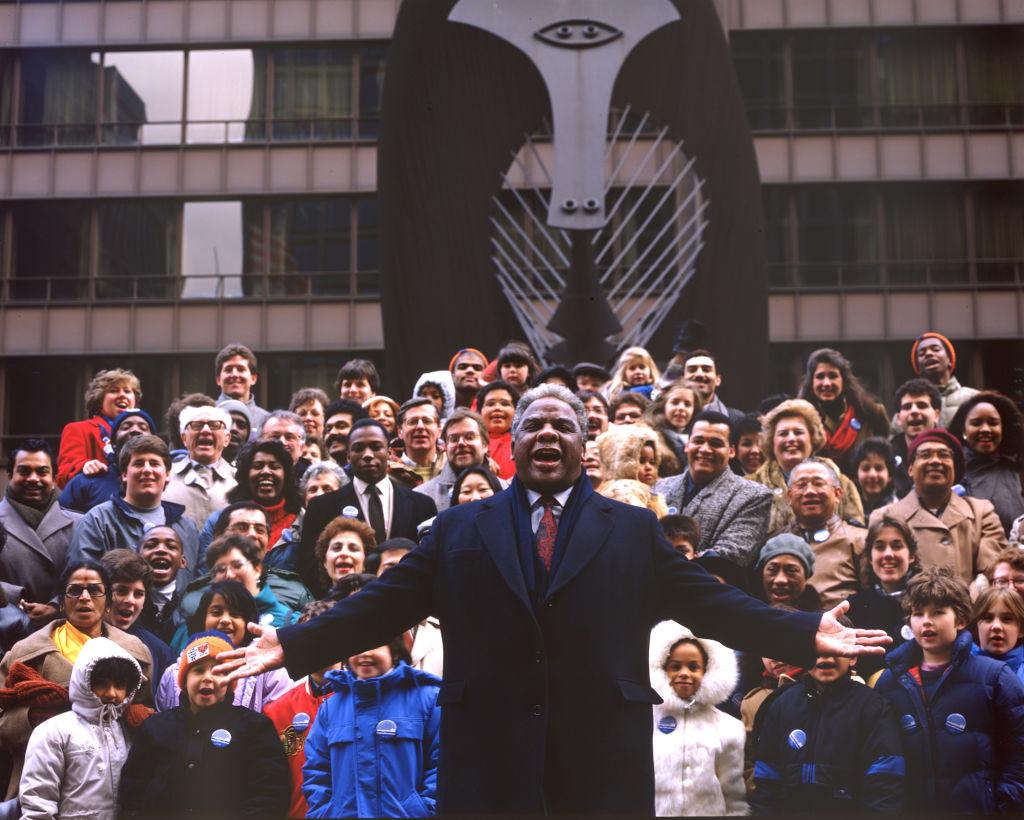
Mayor Harold Washington with supporters at Daley Plaza for his reelection campaign in 1986. (Paul Natkin / Getty)
What were the conversations about the election like in your household?
“I like to talk about my father who voted in that 1983 election, and that was the first time he had voted in 20 years. He was a hardworking blue-collar worker, and my mother was a big political talker around the house. He didn't want to have anything to do with politics, but he stood up and voted for Harold Washington because he believed.”