
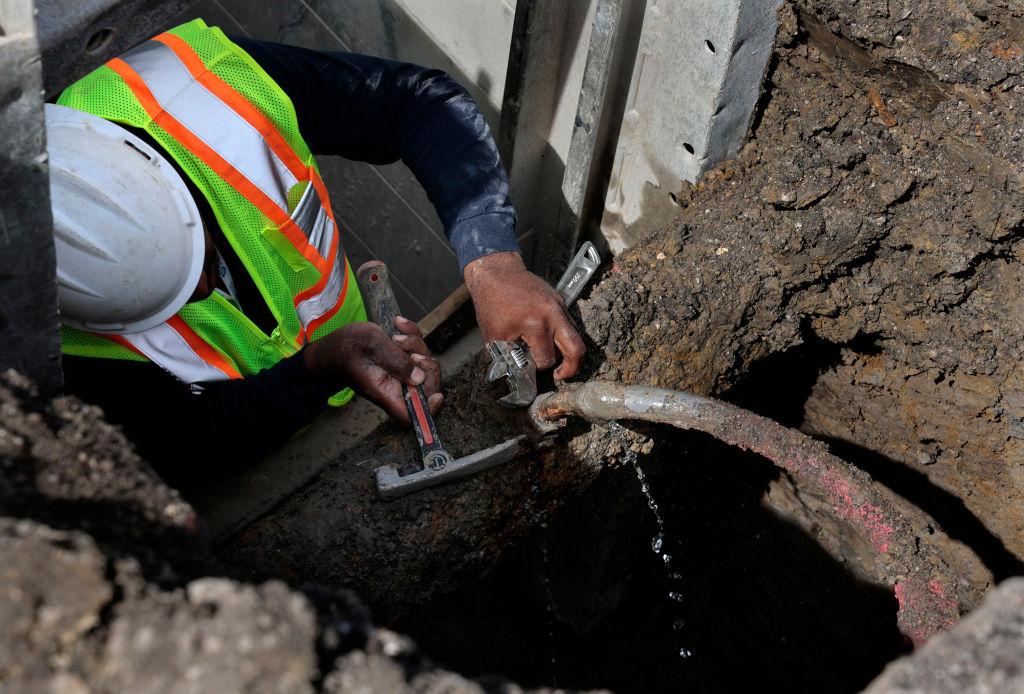
Chicago now has 20 years to replace more than 400,000 lead lines after President Joe Biden imposed a new deadline last week. That’s a long way to go considering the city has only replaced 5,844 lines, the Tribune reported.
Today, we’re revisiting a conversation with Axios’ Monica Eng on how Chicago ended up with the most lead pipe lines in the country.
This interview has been edited for length and clarity.
Why are lead pipe lines toxic?
“Lead can cause developmental disabilities in children, lower IQ, impulsivity, and violence. And in adults, it can cause heart disease. It is not safe at any level, according to the highest health authorities in the world — the National Institutes of Health, the World Health Organization.”
How did Chicago end up with so many lead pipes?
“Places like Cincinnati banned them in the ‘20s. And yet, we required every home — mostly single-family homes and two-flats, but sometimes even as much as 20-flats — to install these. Every single time this came up, the very powerful Chicago Plumbers Union lobbied to keep this in place.”
“Mayor Richard J. Daley was best friends with Stephen Bailey. They grew up together. He was the head of the Chicago Plumbers Union, and he had an in with the mayor. The building code required you to put in these lines that could only be installed by a licensed plumber.”
Is it possible for Chicago to move quickly on removing all these lines?
“Well, our history doesn't say that, but there are cities that have moved very quickly and have certainly moved faster than we have. In Newark, New Jersey, they replaced 23,000 lead lines in three years, moving up to 120 per day. And what Newark's water director Kareem Adeem told the Tribune is, ‘We've shown how to get this done because we had the political will to do it. That's what every city needs: political will.’ And I think that's really telling.”