
More than a week after the Red Cross declared an emergency blood shortage, Chicagoans have an opportunity to help at the annual ABC7 Great Chicago Blood Drive Wednesday and Thursday.
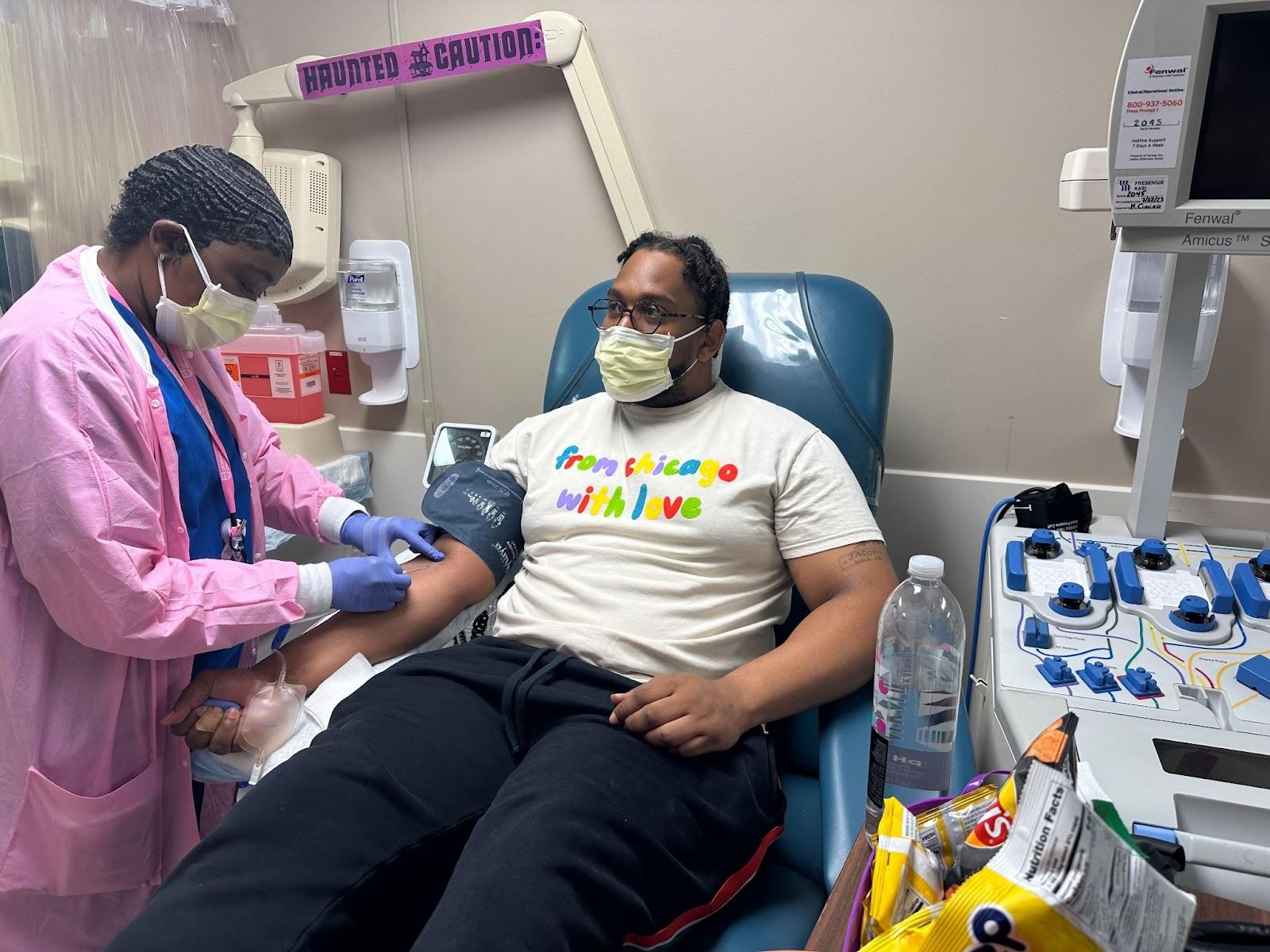
City Cast Chicago podcast host Jacoby Cochran gave blood in the fall while Dr. Geoffrey Wool, medical director at the University of Chicago Medicine Blood Bank, told the City Cast Chicago podcast what donors should know.
This interview has been edited for length and clarity.
Why have blood donations decreased?
“Older donors who are reliable donors have aged out or passed away. We need younger donors to take their place, and we've been somewhat successful in that but we're not quite meeting where we need to be.”
“There used to be a lot of gap between what was collected — the total blood we get from donors — and what was transfused. The gap there is technically waste, but because it ends up never being transfused, it was a helpful resource because you could move the blood around to where it was needed. Now those lines are very close to each other — there is no extra.”
Who are you encouraging to donate blood?
“We need all donors. While group O people might hear that they're helpful for red cells, we need platelets from everybody. We need all the different blood products. … We really want to get young people in the door and make it an enjoyable experience that they feel that they're benefiting man and womankind, which they are.”
What sort of screener questions are asked?
“We'll ask you somewhat invasive questions in a form. … We want donors to feel comfortable answering honestly because honest answers to the questions are the foundation for a safe blood supply.”
“We're asking about risk behaviors that can impact donors regardless of their gender or sexual preference. We ask about travel related to malarial risks and other diseases that might be prevalent in other parts of the world. … We ask about promiscuity and different insertive sexual behaviors that are at higher risk for transmitting HIV. Specifically, we ask about multiple partners or anal sex. It's still not perfect. It's still not exactly the same depending on your sexual behavior, but it is much closer to being as equitable as we can.”