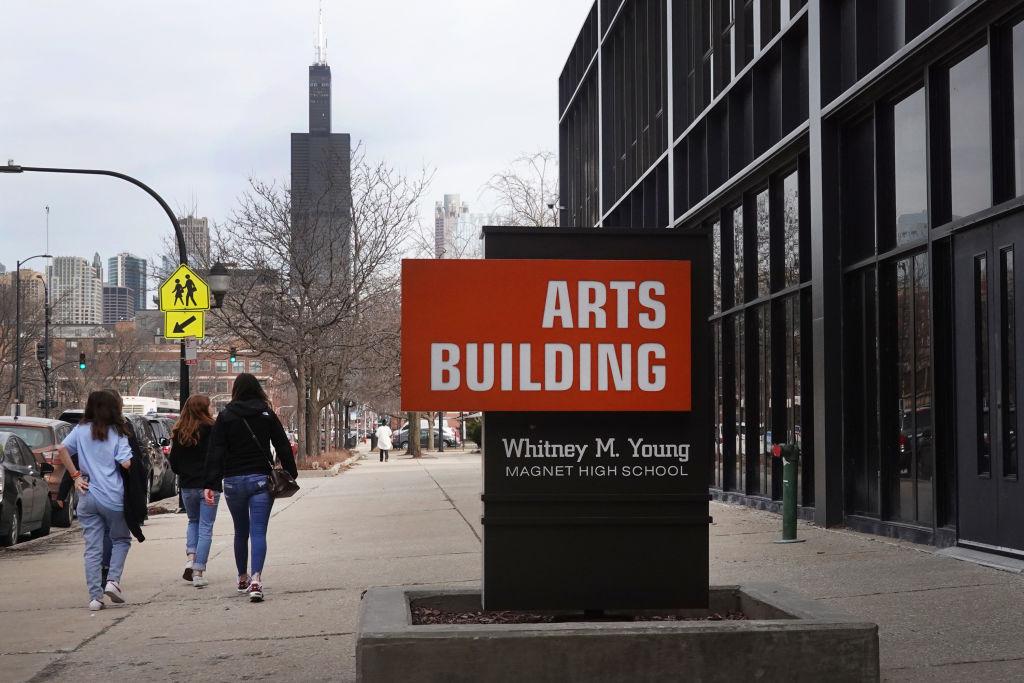
What is the future of Chicago’s selective enrollment schools, the test-in high schools ranked among some of the best in the country?
That’s what some Chicagoans are wondering after Mayor Brandon Johnson and his school board committed to prioritizing neighborhood schools and moving away from school choice. State lawmakers recently advanced a bill that would prevent the board from making changes to the city’s 11 selective enrollment high schools until 2027.
WBEZ’s Sarah Karp told the City Cast Chicago podcast about the history of the competitive schools.
This interview has been edited for length and clarity.
Why were selective enrollment schools created?
“Because there were so few white students that went to Chicago Public Schools, it was hard to say how are you going to spread all those white kids out to make any amount of integration in Chicago Public Schools. So what they wound up saying is, ‘We just want to create a certain number of high schools that are racially diverse.’”
“Originally what they had was a formula for getting in that would ensure that they'd be diverse. … Now getting into the schools, we use socioeconomic status of the family based on the address as a proxy for race.”
White students are overrepresented in selective enrollment schools. How do inequities persist?
“One of the reasons why there's this big imbalance is because those [top] 30% of seats are going overwhelmingly to richer white kids.”
“There's also been such crazy things that have happened. Like every year when the inspector general of Chicago Public Schools puts out his annual report, he talks about people who don't live on the South Side of the city, but bought a whole apartment there to rent out so they could get use the address because that's a lower socioeconomic tier.”
Do experiences really differ at selective enrollment schools compared to neighborhood schools?
“I think the main difference is that you have extra resources poured into selective enrollment schools. You have extra positions. They also have robust enrollments because people are actually clamoring to get in. A lot of funding in CPS has been based on enrollment. And in a lot of these cases, ‘friends of’ groups — fundraising mechanisms — are raising hundreds of thousands of dollars. … And so that's on top of whatever you get in government funding. That can be [put toward] like extra arts teachers and extra sports programs and extra fancy labs.”