
The noise is coming. Is it hundreds of mopeds? Chainsaws? Lawnmowers?
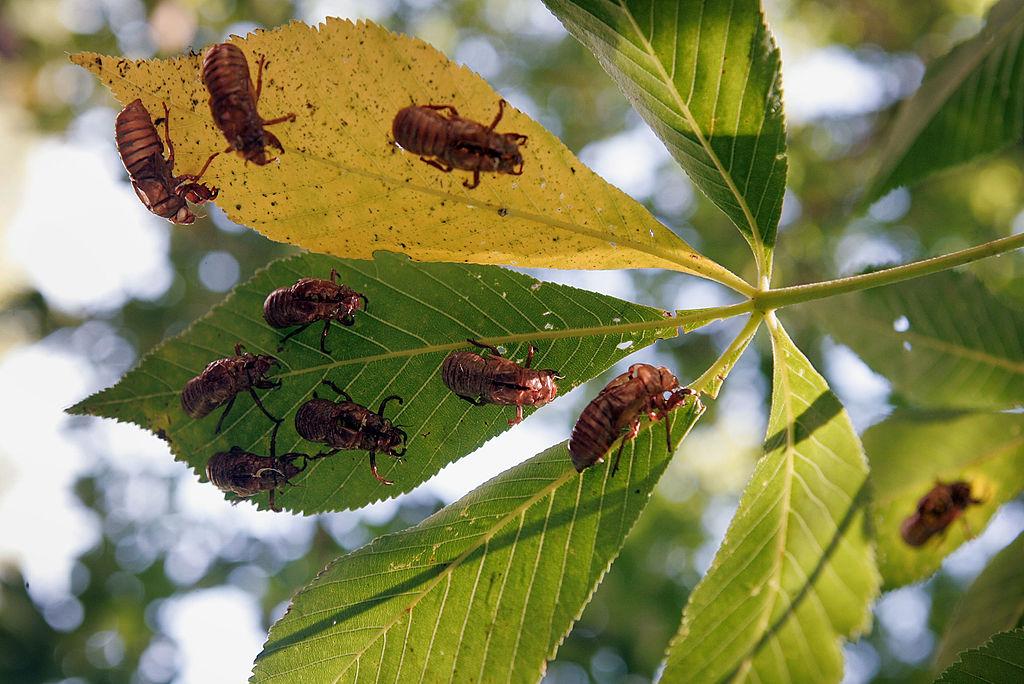
Nope, it'll be the nonstop buzzing of two cicada broods beginning to emerge in Illinois. Here’s what to know and how to celebrate.
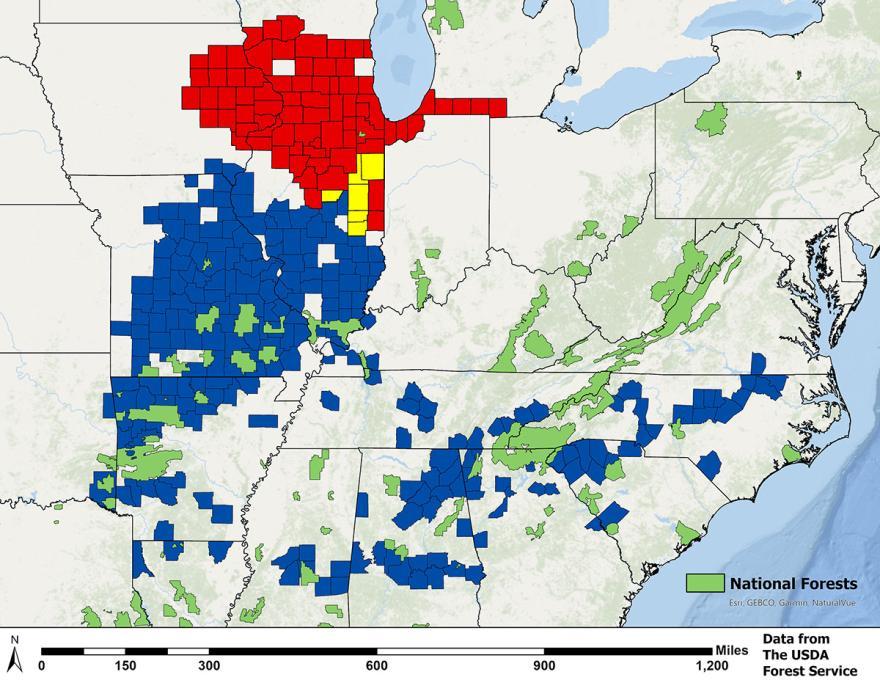
The areas in red show where Brood XIII, a 17-year brood, is expected to emerge. The areas in blue show where Brood XIX, a 13-year brood, is expected to emerge. The area in yellow shows where these broods are expected to overlap. (USDA Forest Service graphic)
Why is This Year’s Emergence Significant?
Two broods of periodical cicadas, species that emerge every 13 or 17 years, are coming out and mating, the Insect Asylum’s Nina Salem told the City Cast Chicago podcast. That won’t happen again for 221 years.
Parts of Brood XIII will emerge in northern Illinois and Indiana while Brood XIX will be in other parts of the state, which means there will be overlap in Central Illinois.
How to You Protect Your Trees
For starters, cicadas don’t bite and aren’t really harmful to humans. But female cicadas will soon be looking for trees to lay their fertilized eggs. While they’re not destructive, the weight of the cicadas can affect saplings, which is why you can cover your tree in tulle to reduce visual harm. That means it’s also not be the best time to plant trees.
Get in on the Cicada Fun
The Insect Asylum in Avondale has all types of cicada programming from a community art project to merch. The Cook County Forest Preserves has exhibits and discovery walks. Plus, you can even try your hand at cooking with cicadas. (And if you do, send us a pic!)