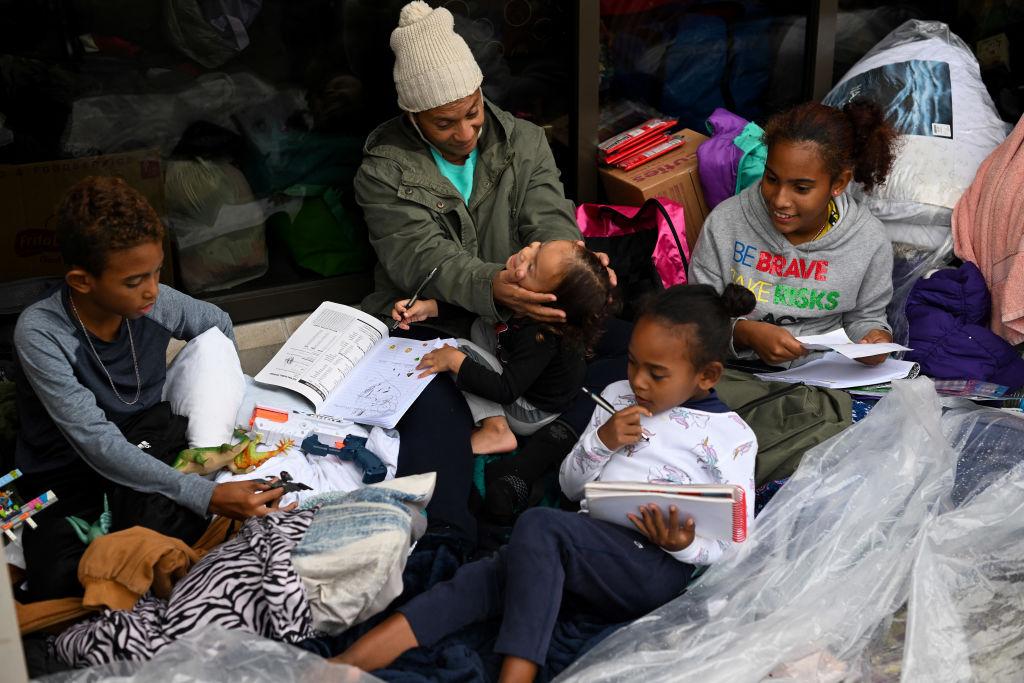
More than 26,000 migrants have arrived in Chicago since last year, leading to tensions over where new arrivals should stay. But today, we’re going to home in on other aspects of migrants’ lives in Chicago.
Mental Health
Migrants have fled their homes, been separated from their families, and endured the dangerous journey to the U.S. But faced with struggles to fulfill basic needs and language barriers, many migrants haven’t been able to deal with their trauma. Local mental health professionals are worried a crisis is coming, WBEZ reported.
Hurdles Finding Work
The Biden administration expanded temporary protected status for migrants who are Venezuelan nationals, protecting some new arrivals from deportation and allowing them to apply for legal work permits. But the process to apply is tedious and expensive: One family of four said it would cost them $2,000, according to Borderless.
School Rock Band
Dozens of Venezuelan students have enrolled in Sullivan High School in Rogers Park, also known as “Refugee High.” Urged to join the school rock band by a social worker and inspired by Olivia Rodrigo, some students showed off their Venezuelan pride at a recent school show, WBEZ reported.
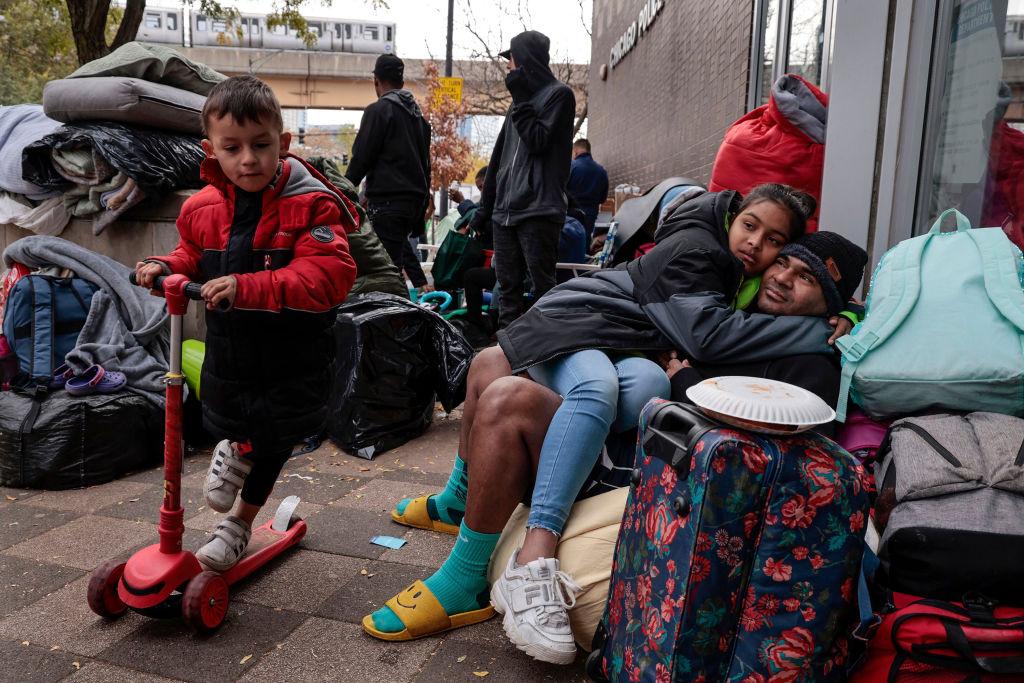
Outside the 1st District police station, migrants Michael Castejon and Andrea Sevilla wait for a ride-share to O'Hare Airport to return to Venezuela. (Antonio Perez / Tribune / Getty)
Those Who Came And Left
Shortly after arriving in the city, some migrants decided to go home or to different cities, the Tribune reported. Why? Warm weather, more resources, and opportunities to reunite with friends and family.
Revisit Stories About Early Migrants
Migrants first started arriving in buses from Texas in 2022. In this award-winning series, Block Club and Borderless followed 10 migrants who were among some of the first to come to the city.