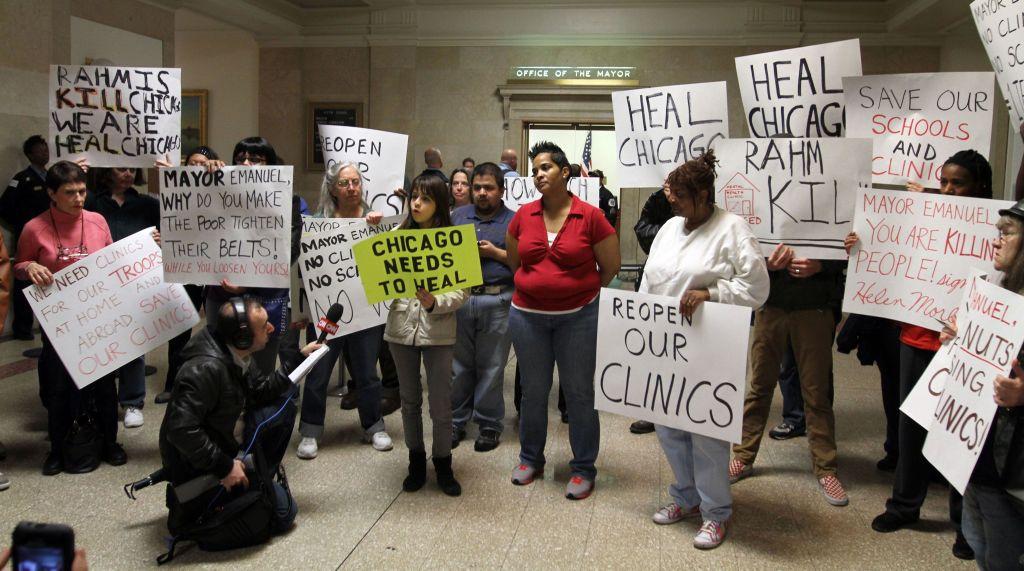
Mayor Brandon Johnson announced plans last week to expand the city’s mental health services, one of his major campaign promises. Here’s why the move is significant.
How Is Mental Health Care Expanding?
Roseland’s clinic is set to reopen by the end of the year. The Far South Side clinic has been closed for 35 years. Services will also be added to a city-run vaccine clinic in Pilsen and the Legler Library in Garfield Park.
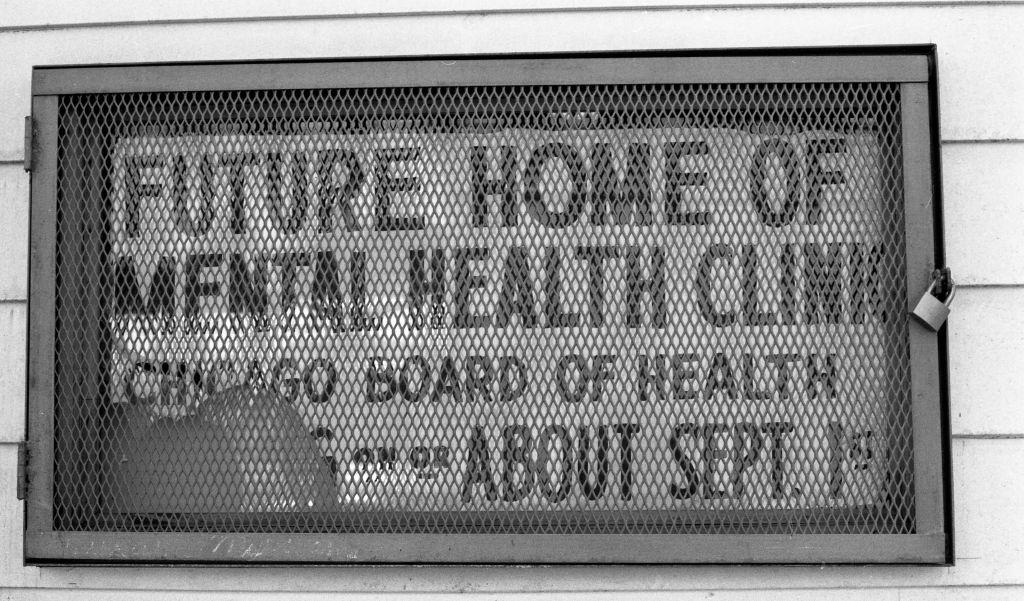
A sign in 1968 on the building set to become a mental health clinic. (Ann E. Zelle / Getty)
A Brief History of Mental Health Clinics in Chicago
By the ‘80s, Chicago had 19 city mental health clinics following a national movement away from state psychiatric hospitals and toward community mental health centers.
But that number has shrunk to five today after cost-cutting closures by Mayor Richard M. Daley in the ‘90s and Mayor Rahm Emanuel in 2012.
Despite campaigning on reopening the city’s shuttered clinics, former Mayor Lori Lightfoot instead shuffled funds to community mental health organizations and the city’s remaining clinics.
Is This a New Era for Mental Health in Chicago?
The first-term mayor campaigned on Treatment Not Trauma, an initiative that proposed reducing the police budget to fund reopening clinics and alternative 911 responses. This year, Johnson allocated $5.2 million in his $16.77 billion budget to reopen two city-run mental health clinics. The police budget was not reduced in 2024.
But a city-commissioned report says future clinic openings might be based on current need and not on past closures. The report also outlines plans to ramp up nonpolice responses to mental health emergencies and other clinical services.