
Will City Council approve a budget before the Dec. 31 deadline? That’s a question worth billions of dollars.
Mayor Brandon Johnson and alders have been divided over how to address an almost $1 billion budget gap. But with the end of the year fast approaching, what happens if the budget doesn’t get passed?
Why No Budget = Bad News
Budget experts and alders are unsure what exactly would happen — Chicago has always managed to pass a budget. According to the Tribune, not passing a budget could mean:
- Being unable to provide city services or pay workers
- Hurting the city’s credit rating and borrowing abilities
- Faith being lost in government
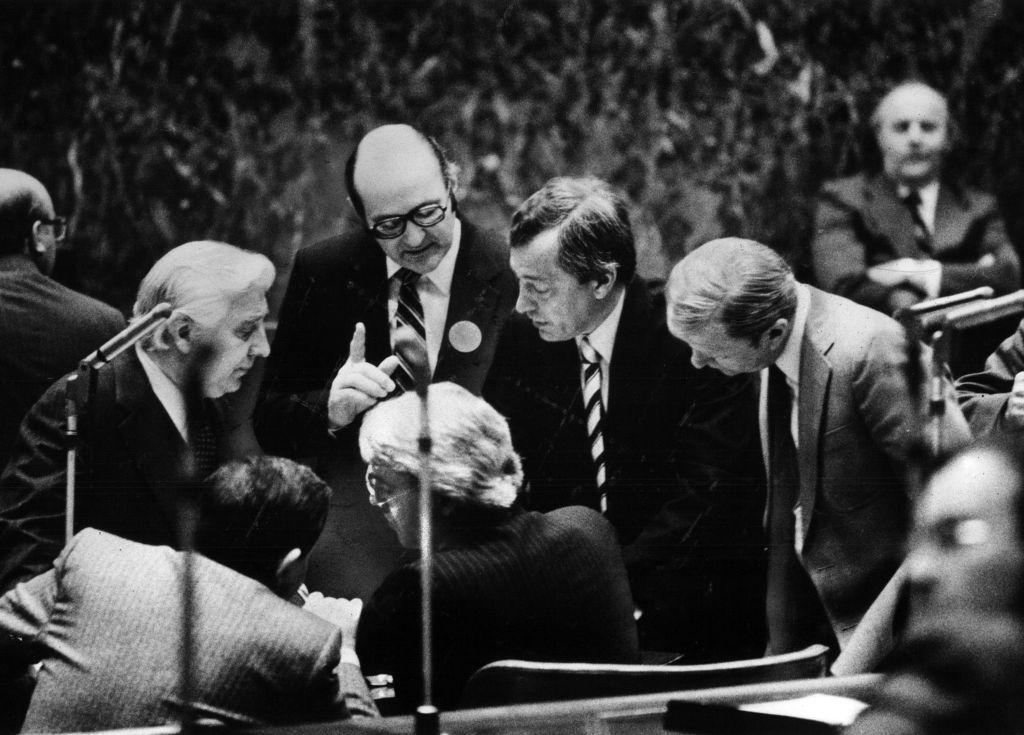
An attorney advises a group of rebel alders battling Chicago Mayor Harold Washington for control of City Council in 1983. (Michael Budrys / Chicago Tribune / Getty)
What Do the History Books Say?
While Chicago almost missed the budget deadline during the tense Council Wars of Harold Washington’s mayoral administration, a last-minute compromise was reached.
But Illinois’ two-year budget impasse in the 2010s likely remains in recent memory of many Chicagoans: The stalemate hurt bond ratings, left staffing vacancies, and eroded public confidence in the state government.
So Where is the City in the Budget Process Now?
Johnson’s proposed $300 million property tax hike has been slashed down to a $68 million hike. But more than half of City Council members signed a letter last week pushing for other spending cuts instead, including reducing the size of the mayor’s office, according to the Sun-Times.
The city is also considering increasing the grocery bag tax and adding a ride-share surge tax downtown and a parking tax, CBS Chicago reported.
While debates continue, alders are also proposing legislation to start the budget process earlier and make it more transparent.