

Growing up in Chicago, I learned early that our Windy City nickname isn't really about the wind, but about politicians who were "full of hot air." Whatever that meant.
But in what's shaping up to be one of the windiest springs on record, I thought I’d dig a little deeper. Perhaps there’s some truth to the age-old moniker.
💨 A windy season
As a hat girl, I can attest — it’s been a windy spring. March is generally windy due to seasonal changes, but this year, 20 March days carried gusts over 30 mph. Ten had gusts over 40 mph.
The rest of the country was feeling it too. Forty-eight states had above-average wind, and the National Weather Service issued a record number of wind alerts.
April and May tend to be windy in Chicago anyway due to a large difference in the temperature between the land air and the lake air, but Chicago does not even crack America’s top 10 windiest cities.
However Chicago’s lake breeze may indeed have contributed to the city’s nickname as the Windy City.
⚾️ The lake and baseball
Recorded mentions of Chicago as a physically windy city (no caps) date back to 1873 with the Daily Globe referencing Chicago’s self-promotion as a summer resort town thanks to summer lake breezes. The same year, The Philadelphia Inquirer called Chicago "the great city of winds and fires."
In 1876, Chicago was billed as the Windy City (yes caps) multiple times in reporting on the city’s contentious baseball rivalry against Cincinnati. Likely, the reference was intended to slam Chicagoans as, well, windbags.
Also in 1876, the Cincinnati Enquirer used the phrase “That Windy City” when covering a tornado that had torn through Chicago. (Yes, tornadoes can hit Chicago.) Etymologist Barry Popick told the History channel the mention was “clearly double-edged … They used the term for windy speakers who were full of wind, and there was a wind-storm in Chicago.”
Later, in 1885, the Cleveland Gazette featured dispatches from Chicago with a cover headlined, “FROM THE WINDY CITY,” implying the term was already well known.
Notably, this all predates Chicago’s campaign for the World’s Fair — and our beloved windbag politician story.
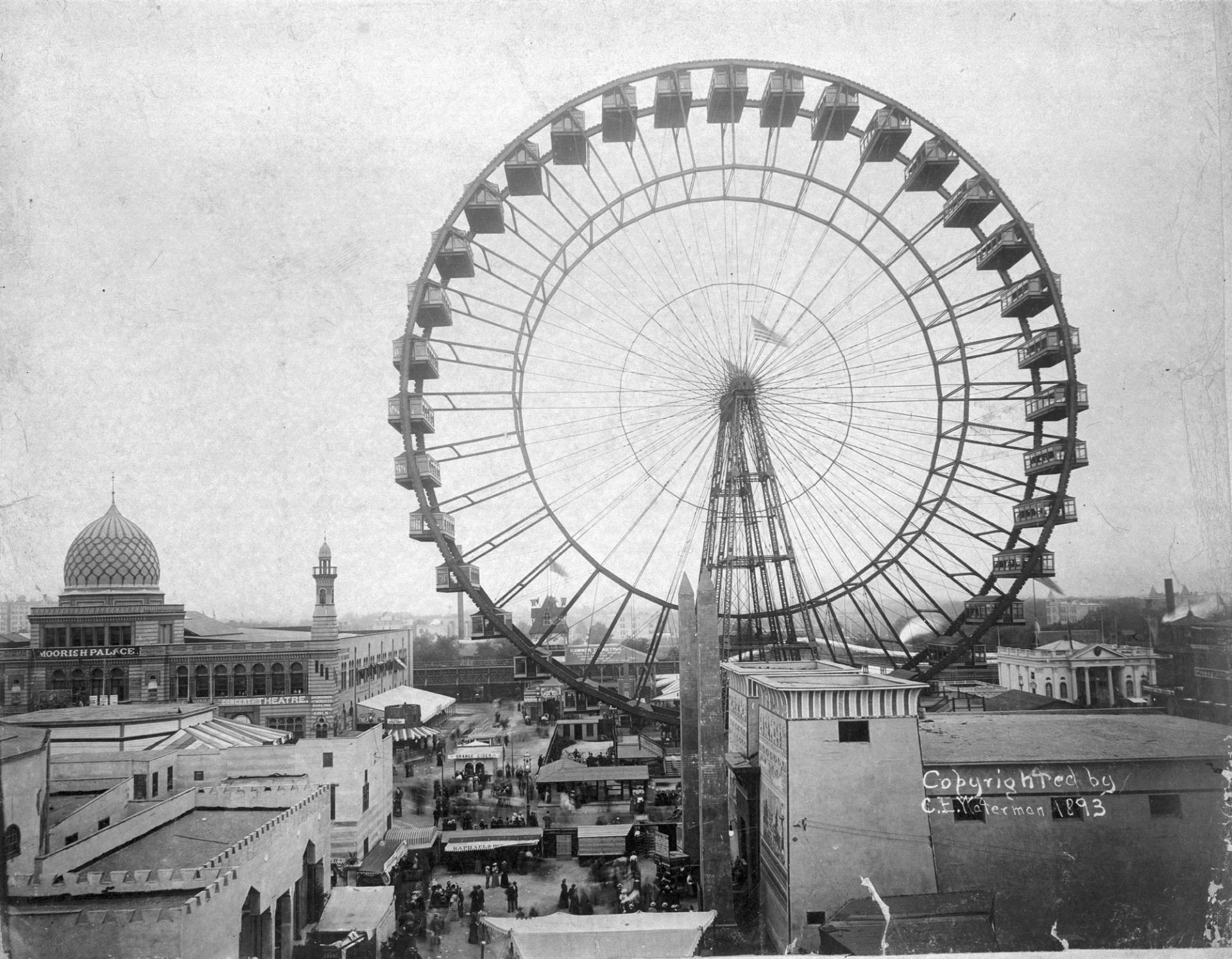
The first-ever Ferris wheel at the World’s Fair in Chicago in 1893. (Photo by C.E. Waterman/Chicago History Museum/Getty Images)
🏛️ The famous windbag politician theory
Now, here’s the story I learned as a kid. The year? 1890-something. Imagine it: Chicago, freshly reborn from the flames of the Great Chicago Fire, is desperate to prove its chops by hosting the World’s Fair. New York City is the place to beat.
In an editorial at the time, New York Sun journalist Charles Dana slammed the bid by Chicago’s politicians, whom he viewed as “full of hot hair.” Dana urged readers to ignore the “nonsensical claims of that windy city.” The piece spawned the idea that Chicago politicians were longwinded liars. BS-ers. Being Chicagoans, we doubled down on the insult. Wore it like a badge of honor.
However … no one can track down this article. Is this theory really just an urban legend?
All we know for sure is Chicago went on to crush the World’s Fair in 1893, our politicians can be, to put it nicely, “windy,” and it has been an unusually blustery spring.