
If you’ve driven around Lincoln Square the last couple of weeks, your car may have been rerouted. Or perhaps, like me, you passed through on foot.
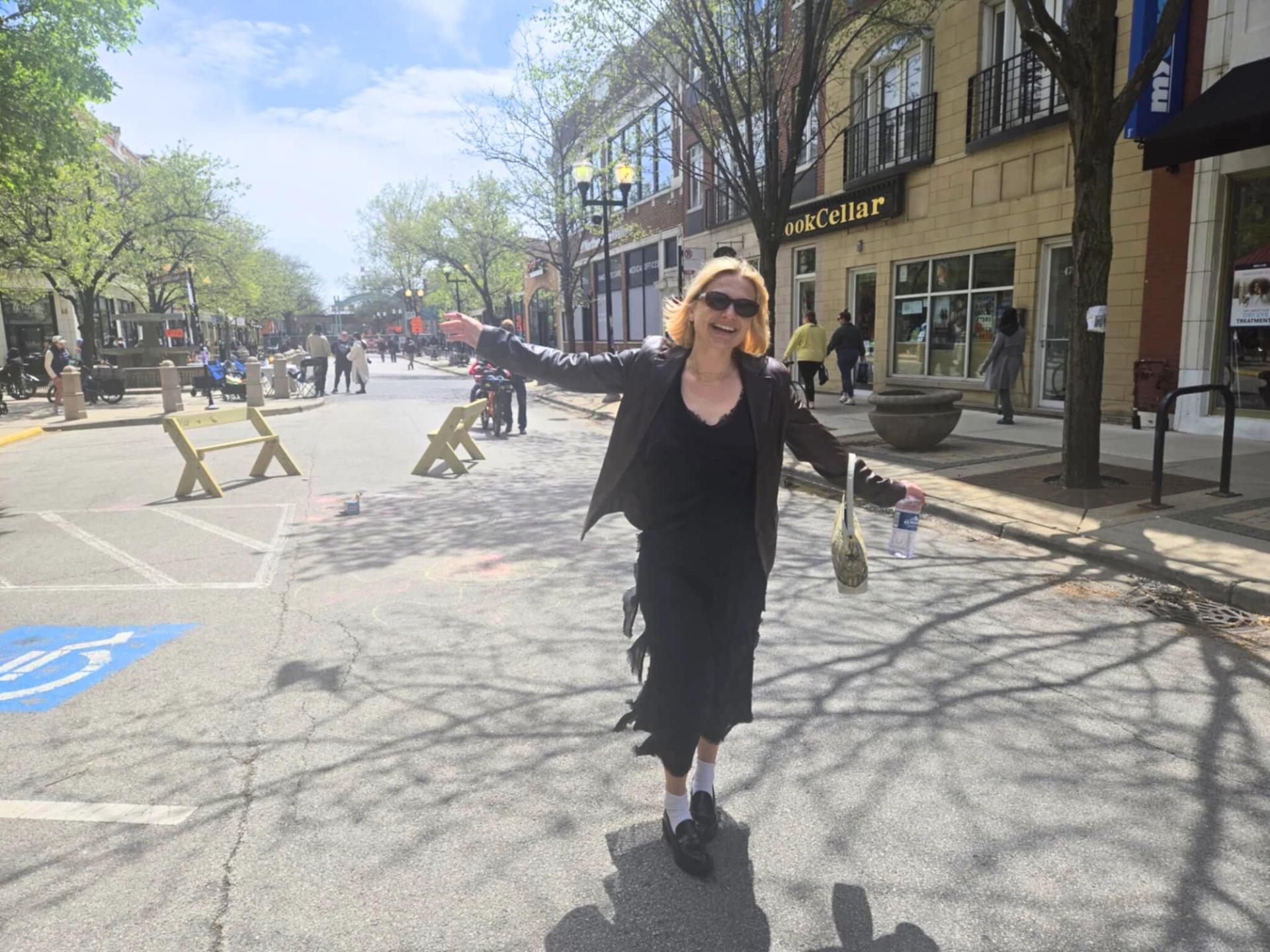
Amid construction on the Western Brown Line station, the 4700 block of North Lincoln Avenue closed to car traffic on April 21. That closure was extended until Wednesday as neighbors — including lots of children — flocked to enjoy the extra pedestrian space.
“It’s great to see people taking advantage of the construction to show how typical spaces that we use for cars can be reimagined as spaces for people,” Cori Dahl, local chapter lead for the Global Walkability Correspondents Network, told Hey Chicago.
Reenvisioning Chicago Streets for Walkers
While the carless stretch of Lincoln Avenue is temporary, permanent pedestrian-friendly solutions have gained recent traction. A $27 million makeover is currently underway at the Logan Square traffic circle. Crews are rerouting Kedzie Avenue north of Milwaukee Avenue to create a walkable public plaza next to the Blue Line station: La Placita. It’s set to open summer 2026.
The move by the city signals increased focus on pedestrian access, and residents are voicing similar desires. In April, a bid to turn 1.5 miles of Michigan Avenue into a pedestrian-focused cultural corridor won the University of Chicago’s Harris Policy Innovation Challenge. Also last month, a Roscoe Village man gained buzz for posting AI-generated renderings of a permanently pedestrianized Lincoln Square center.
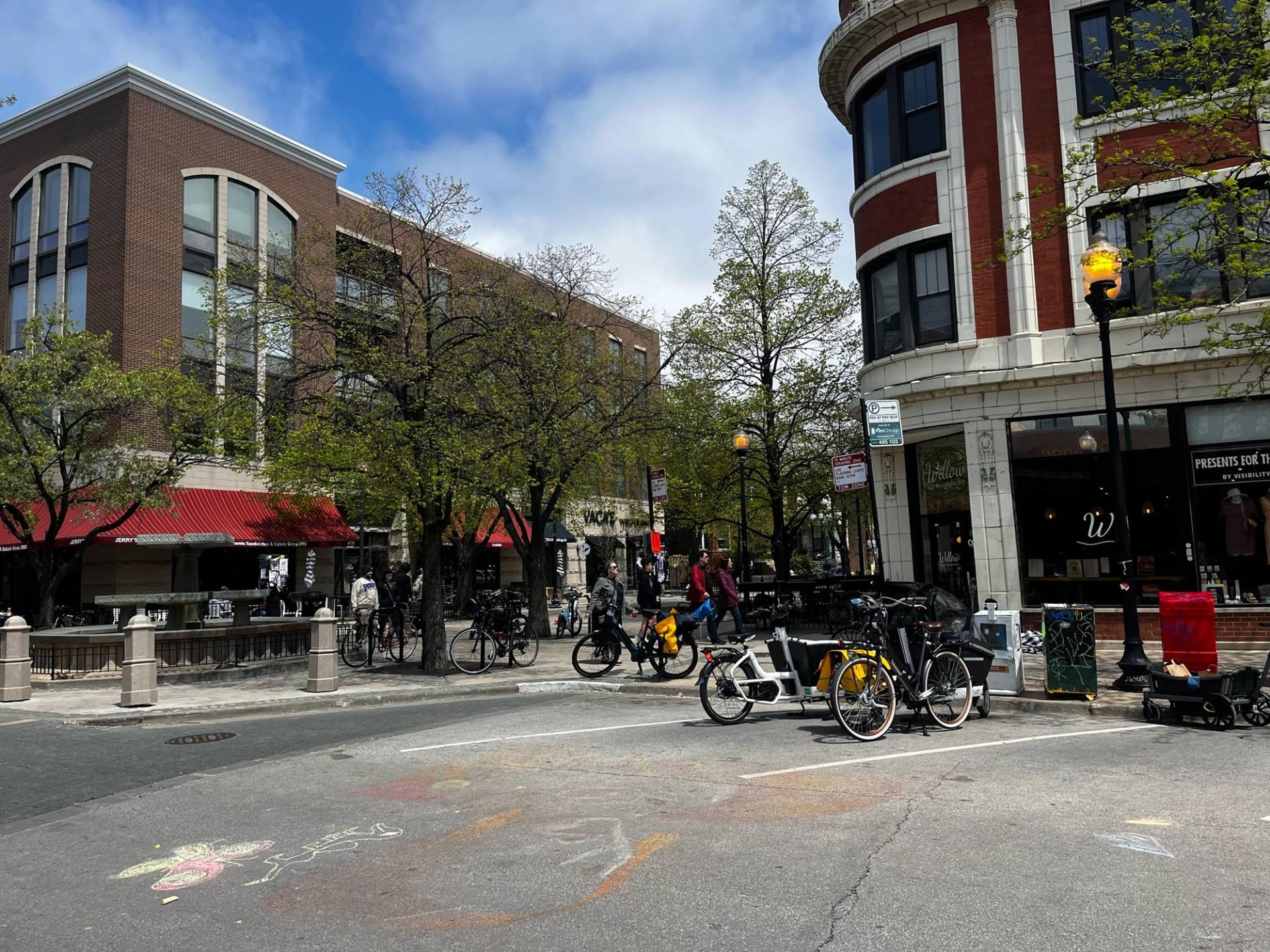
For now, cute chalk drawings populate Lincoln Avenue. (Photo courtesy of Emmi Mack / City Cast Chicago)
Streets That Are Already Walker-Friendly
Pedestrianization doesn't just mean closing streets off to cars, though. In Humboldt Park, raised crosswalks and additional pedestrian islands are being discussed to increase walker safety. Meanwhile, Chicago is already home to 62 designated Pedestrian Streets.
Called Pedestrian Streets (or P-Streets) in Chicago zoning code, developments on these stretches must orient toward the sidewalk, and car-oriented businesses, driveways, and drive-throughs are not allowed. Although cars can drive on P-Streets, the goal is a more inviting physical experience for pedestrians, spurring interaction with the buildings (aka shops) around them. That’s capitalism, baby!
The vast majority of designated P-Streets are on the North Side: all but 12. “It would be great to see more [P-Streets] develop permanently, especially in neighborhoods on the South and West Sides where historically we haven’t seen the same pedestrian infrastructure investments,” Dahl said.
Beyond the North Side, P-Streets occur in:
- Hyde Park
- Chinatown
- Little Village
- North Lawndale (Two P-Streets)
- Pilsen (Four P-Streets)
- South Chicago
- Beverly
- South Loop/Motor Row
You can explore all 62 locations here, via Chicago Cityscape’s interactive map.
As we wait for the city to invest in new crosswalks, plazas, and corridors, consider taking on the official P-Street Challenge (which I just made up will totally do): Hit ‘em before fall. Who’s with me?